Skip to content
Skip to product information
1 of 12

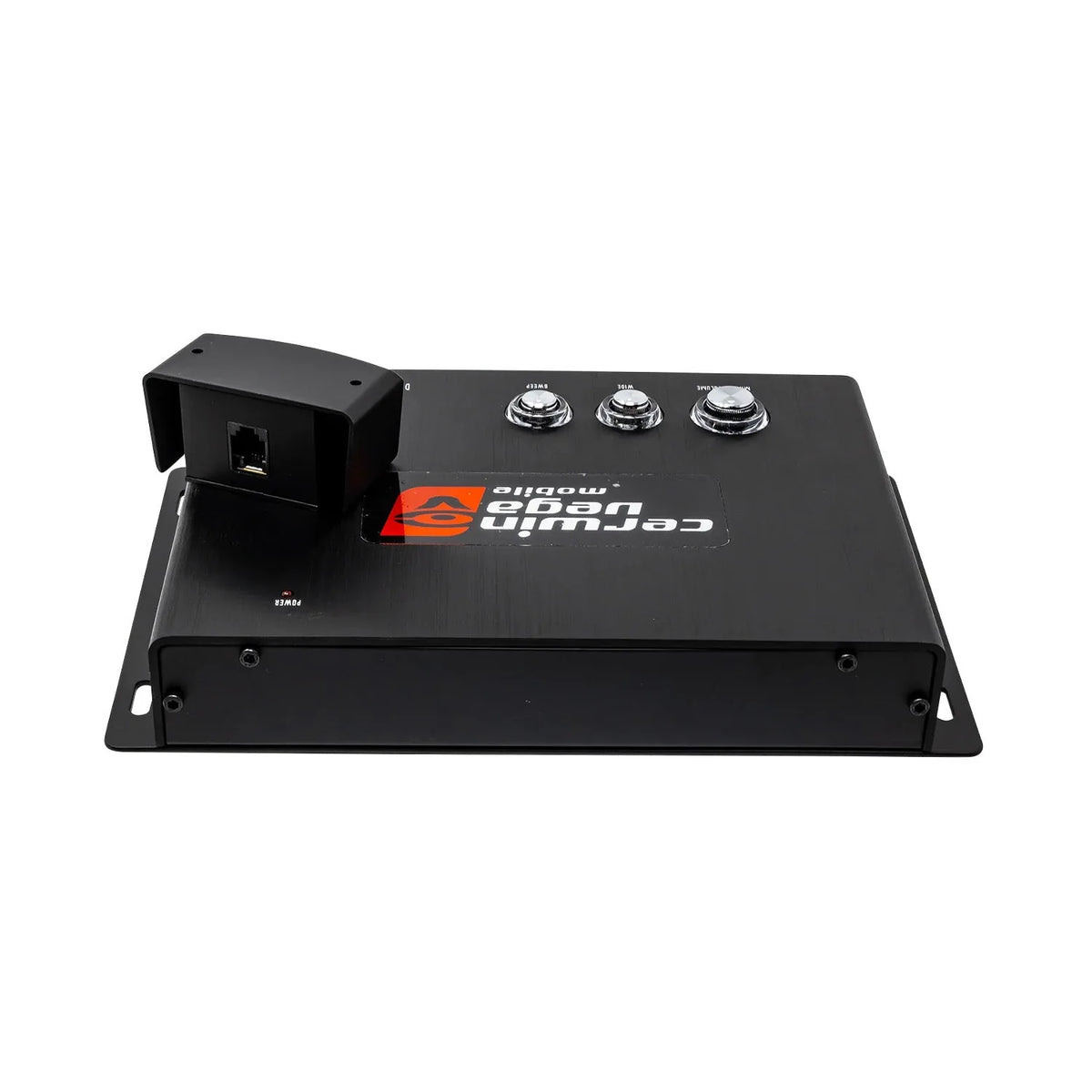
Digital Bass Restoration Processor - CVM2

$109.99 USD
$109.99 USD
Sale Sold out
  • Secure Checkout
  • 100% Authentic Products100% Authentic
  • Enjoy Free Shipping!Free Shipping
  • Live Chat SupportLive Support

Digital Bass Restoration Processor

Maximize the low-frequency performance of your car audio system with the Cerwin-Vega CVM2 Mobile Digital Bass Restoration Processor, a powerful audio processor designed to restore, enhance, and control deep bass frequencies for a richer and more dynamic listening experience. Built for serious car audio enthusiasts, the CVM2 delivers precise bass processing and signal enhancement to help your subwoofers perform at their full potential.

The Cerwin-Vega CVM2 bass restoration processor is engineered to recover lost bass frequencies commonly removed during music compression. With advanced digital bass restoration technology, the CVM2 rebuilds and strengthens low-frequency signals, producing deeper, tighter, and more impactful bass while maintaining clarity and accuracy.

This processor features high input and output voltage capabilities, including a 15V RMS maximum input level and 13.2V peak maximum output, ensuring strong signal performance without distortion. The built-in bass driver circuitry and bass equalization controls allow users to fine-tune low-frequency response for optimal performance across a wide range of music genres.

For advanced customization, the CVM2 includes Para-Bass controls, allowing adjustment of both the center frequency and bandwidth of the bass enhancement. This enables precise tuning of the bass response to match your subwoofers, amplifier, and vehicle acoustics.

The included wired dash-mount bass remote control allows convenient adjustment of bass levels directly from the driver’s seat. This feature lets you quickly adjust bass output depending on music style or listening preferences without accessing the main processor unit.

To protect your system, the CVM2 also features a PFM subsonic filter switch and adjustable subsonic filtering from 30Hz to 120Hz, helping remove harmful low-frequency signals that can damage speakers or cause distortion.

Key Features:
Digital bass restoration processor for car audio systems
Advanced bass driver circuitry for deeper, stronger bass
15V RMS input and 13.2V peak output capability
Para-Bass controls for precise bass tuning
Adjustable subsonic filter with PFM protection
Wired dash-mount bass remote for convenient control

The Cerwin-Vega CVM2 Digital Bass Restoration Processor delivers powerful bass enhancement, precise control, and clean signal processing, making it an essential upgrade for car audio systems seeking deeper, louder, and more accurate bass performance.

  • 15V RMS Maximum Input Level
  • 13.2V Peak Maximum Output Level
  • Bass Driver Circuit
  • Bass Equalization Circuit
  • Dash Mount Remote Control
  • Bass Maximizer Indicator
  • PFM Subsonic Filter Switch
  • Bass Output Control
  • Maximizes System Bass Response
  • 2-Channel Preamp Inputs and Outputs
  • Para-Bass Controls Adjust Center Frequency and Width of Bass Processing
  • Adjustable Subsonic Filter (30-120Hz, 12/dB Octave)
  • Wired Dash-mount Bass Remote
  • Frequency Response: 10 – 30KHz
  • Output Voltage Level: 13.2
  • Dimensions: 8”W X 6.5”H X 1.9”D
 
View Product Details

Elevate Your Sonic Heritage

Since 1954, Cerwin-Vega has defined legendary performance. The CVM Series brings that iconic heritage to your fingertips, delivering professional-grade precision and rugged durability for a truly immersive, high-fidelity experience.

Engineered for Peak Performance

Upgrade your audio setup with the perfect balance of innovation and value. Built with premium components, our CVM gear ensures reliable, crystal-clear output that captures every sonic detail with effortless power.

Q1: When do I need a line‑output converter (LOC)? How should I choose between IOEM‑series LOC and compact SLMLOCT series?
A: You need a LOC when your factory head‑unit lacks RCA pre‑amp outputs, and you plan to add external amplifiers. It converts high‑level speaker‑level signals into low‑level RCA signals. IOEM models are active units with ground‑isolation and load‑select switches, ideal for complex installations prone to noise. The compact SLMLOCT series fits tight spaces for basic upgrades. Match channel count to your system: pick 2‑in‑2‑out for two‑channel builds, or 4‑in‑4‑out for multi‑amplifier setups.

Q2: What are the main differences between DSP, analogue EQ equaliser, and LOC? Can they be used together?
A: A LOC only converts signal voltage level without tone adjustment. An analogue graphic EQ lets you manually adjust frequency bands as an analogue pre‑stage. Digital DSP offers crossovers, time‑alignment, phase adjustment and parametric EQ via tuning software. They can be combined properly: the factory signal feeds a LOC, then passes to DSP and onwards to amplifiers. Avoid cascading multiple analogue EQ units, as this will raise the noise floor and degrade sound quality.

Q3: Can BTR‑series Bluetooth receivers work without a factory head‑unit? What vehicles are they suitable for?
A: BTR Bluetooth receivers operate standalone without an OEM radio, outputting RCA audio to amplifiers. They work great for UTVs, jet‑skis, motorcycles and off‑road vehicles with no stock head‑unit. They can also add wireless streaming to existing car‑audio systems. Check model specs; select water‑resistant variants for rough outdoor and wet environments.

Q4: Will the CHGLIRCA ground‑loop isolator definitely fix alternator whine noise?
A: The CHGLIRCA isolator suppresses ground‑loop noise, yet it is not a universal fix. When you hear engine‑speed‑dependent whine, first verify all devices are grounded to bare chassis metal, route RCA cables away from power wires, and set the correct load‑select switches on your LOC. Add the isolator only after proper wiring has been completed. It cannot eliminate noise originating from a contaminated vehicle power supply.

Q5: What installation tips apply to DSP processors? Will a DSP drain my car battery?
A: DSP units require 12V constant power, ground and a REM turn‑on signal. Use ACC‑switched power so the unit sleeps automatically at ignition‑off to prevent battery drain. Mount away from heat and moisture. Physical installation is not complete without tuning: configure crossovers, time‑alignment and EQ with official software. Keep input/output gain moderate to prevent signal clipping. Professional shop tuning is recommended if you are unfamiliar with DSP tuning workflows.